
 |
  |

Album review
Beethova Obas
Mixing Cuba, Haiti and Brazil
Paris
25/07/2003 -
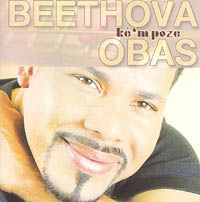
RFI Musique: You’re based in New York these days. Do you think this has had any effect on your sound?
Beethova Obas: Well, I don’t know about ‘based.’ I like to think of myself as a citizen of the world and that explains why I live between suitcases. I tend to live out of one case that’s unpacked, but there’s always a packed one standing by for when I go off again.
I have to admit, though, that living in the so-called ‘developed’ world means I’ve been spared all kinds of technical problems which would have prevented my sound evolving. Musically speaking, Haiti will always be a vital source of inspiration for me. I often go back there to recharge my batteries, in fact. Living in New York’s a lot like Haiti in a way - without all the technical, political and economic problems! There’s a big Haitian community in New York, so I feel like I’m living in a mini Haiti in a way.
Your new album revolves around the catchy new sound of cubhabra. Is this a totally new rhythm?
Yes, I guess you could say that. To be exact, cubhabra is a fusion of three different rhythms from Cuba, Haiti and Brazil. And I think you can say the mixing of these three different rhythms has given rise to a totally new sound.
Is Brazil as close to your heart as the Caribbean?
Yes, of course it is. Musically speaking, Haiti and Brazil have an awful lot of things in common. The two countries have a lot of other cultural things in common too. As a guitarist I’ve been immersed in a sort of ‘harmony pool’ and that’s really helped broaden my musical horizons.
An Han, the opening track on your new album, is a traditional Haitian song. Is that one of your goals in life, to introduce traditional music onto club dancefloors?
Everything’s been done before, you know, but you can always find new ways of doing things. Reviving traditional music and reworking old tunes in a contemporary way not only gives them a second life, it also helps them cross generational borders. The sounds I use are the sounds of the young generation who go out dancing on the club scene. So in a way what I’m doing is making the old new.
You were involved in the "Haïtian Troubadours" at one point. What did you get out of that experience?
For me the "Haïtian Troubadours" project was another chance to prove that unity breaks down barriers. It was the same principle that helped our ancestors break down the barriers imposed by slavery. All the artists involved in the project were interested in showing another facet of Haitian music. And I have to say, our motto, “Strength through unity,” should be put into practice more often. That’s the way success lies and that’s something the musicians involved in the “Haïtian Troubadours” grasped from the word go.
So what role do troubadours play?
Since the Middle Ages troubadours have been the ones responsible for bringing news. Music is an essential spice of life and the message of the troubadours was that this vital ingredient of life isn’t just for a specific class or category of people. Music belongs to everyone and the poor and underprivileged of this world have as much right to happiness - including the happiness brought by music - as anyone else. African griots are troubadours. They’re the ones who assure that history is passed down from one generation to the next.
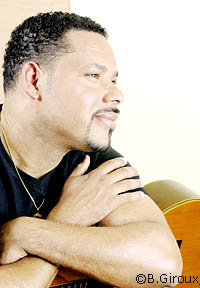
Would you say Ke'm Poze, the title track on your new album, reflects your own approach to life?
I’d say Kè'm poze is a track that represents the new sound of cubhabra. I guess the song reflects the state of my soul right now, too. If you consider life as a ladder, as I do, then you’ll understand there are a series of rungs to climb. Each rung is like a stage in life, a test to overcome. The higher you get up the ladder, the more wisdom you acquire. That’s what I aspire to anyway.
What about the song Kòn Lanbi? Is that a reference to Haiti’s history?
A lanbi is a type of shell which slaves used as a vital means of communication, summoning everyone together at night to plan their bid for freedom behind their masters’ backs. The idea of banding together and promoting unity is a concept that’s more needed than ever in modern-day Haiti if we don’t want our country to descend into the sort of anarchy that will cut if off from the rest of the world. I’m sad to say Kòn Lanbi reflects the way the world is right now and the history - particularly the history of the South - that made it that way. We fought for independence by coming together and standing up for our rights. And that’s the sort of unity I’m talking about on Kòn Lanbi, the sort of unity that means we can start working towards a better future for Haiti.
Next year, on January 1st, Haitians will come together to celebrate 200 years of independence. What does that mean to you?
It means I’m proud to be black! It’s a time for looking back at what’s happened over the past 200 years and assessing the final toll… January 1st is a date that’s a reminder to me in my daily life that we should change the way things are. It’s not some commemorative anniversary that’s going to help build our country! What you need are straight, honest men, men with a vision, men who love and value their homeland.
Slavery is a theme that crops up a lot in your lyrics. Is that because, in your eyes, slavery is a wound that has never healed?
Slavery is a wound that’s never healed, never, anywhere in the world. It’s re-emerged in different guises, but it’s still there even if it does wear a polite public mask these days. Slavery may appear to have been abolished on the surface, but it lives on psychologically. The aftermath of slavery runs so deep that the repercussions are still being felt by us, the grandchildren of the slaves, today. Slavery has left a deep and lasting mark on countries where it happened. Slavery has had a direct effect on the way we live now. And it’s something that will mark both collective and individual consciences for a long time to come.
You sing in French as well as Creole. Is it important for you to feel part of the French-speaking world?
The idea of communication is important to me. It doesn’t matter what language you use, what vehicle you use, what counts above all else is getting your message across. And believe me, if one day I had to get my message across to Martians, I’d be happy to learn their language too!
What do you think about the phenomenal comeback of Henri Salvador? After all, many people see you as his ‘spiritual son’?
I think it’s absolutely brilliant. I wept when I listened to the song J'ai vu from his last album Chambre avec vue. And all I can say is, if I am Salvador’s spiritual son then I wouldn’t want to disappoint him in any way!
Pierre René-Worms
Translation : Julie Street