
 |
  |

Electro Maghreb fusion
'Latitudes Villette/Maghreb'
04/06/2002 -
Visitors are currently flocking to Latitudes Villette/Maghreb, a festival devoted to Maghreb culture organised by "La Cité de la Musique" and "Le Parc de la Villette" (which runs in Paris until 9 June). Today RFI/Musique takes a look at the happening electro/Maghreb fusion scene, reporting on a concert hosted at Le Cabaret Sauvage on 31 May where music fans discovered a host of "New Bled Vibrations" courtesy of DJ Awal, Momo and U-Cef.
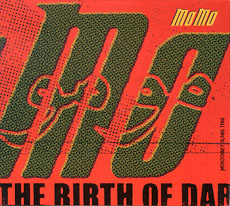 The Birth of Dar, one of the tracks was remixed by a certain Steve Hillage – the producer renowned for his work on Rachid Taha's early "Arabo-techno" experimentation. Which is interesting because, as Lahcen Lahbib explains, Momo decided to dub their new fusion sound "dar" (an Arabic word for house), although Lahbib actually prefers to refer to the group's musical concept as 'Digital And Roots'.
The 'Digital & Roots' movement is slowly catching on in France too, thanks to the monthly "New Bled Vibrations" nights organised at Le Divan du Monde in Paris. The dance nights are beginning to attract an increasing number of European and Arab fans, although kids from France's 'second-generation' of immigrants often live miles out in the city's outer suburbs and generally prefer hardcore rap to techno beats. "Rap obviously has much more of a following amongst young Arab kids than techno," says Mohand, organiser of the "New Bled Vibrations" nights, "But there's a musical and sociological explanation for that. Hip hop revolves around songs with hard-hitting lyrics which address the problems those kids face in their daily lives, whereas house and techno are often purely instrumental. Don't forget that there's a problem of racial discrimination too – bouncers at the top Paris nightclubs aren't so keen on letting coloured faces past the door! So it's not all that easy for Arab kids to get into the techno scene. But personally I'm optimistic about this new urban culture gradually catching on across the board."
Meanwhile, the second volume of New bled électro vibration - compiled by DJ Awal, resident mixmaster at the "New Bled Vibrations" nights – appears to be taking off with a wide range of listeners. Featuring everything from an electro/funk remix of Enrico Macias to hot new fusion tracks from Momo and U-Cef (author of the seminal 1999 album Halalium), New bled électro vibration looks set to take the Maghreb electro fusion to new ears.
The Birth of Dar, one of the tracks was remixed by a certain Steve Hillage – the producer renowned for his work on Rachid Taha's early "Arabo-techno" experimentation. Which is interesting because, as Lahcen Lahbib explains, Momo decided to dub their new fusion sound "dar" (an Arabic word for house), although Lahbib actually prefers to refer to the group's musical concept as 'Digital And Roots'.
The 'Digital & Roots' movement is slowly catching on in France too, thanks to the monthly "New Bled Vibrations" nights organised at Le Divan du Monde in Paris. The dance nights are beginning to attract an increasing number of European and Arab fans, although kids from France's 'second-generation' of immigrants often live miles out in the city's outer suburbs and generally prefer hardcore rap to techno beats. "Rap obviously has much more of a following amongst young Arab kids than techno," says Mohand, organiser of the "New Bled Vibrations" nights, "But there's a musical and sociological explanation for that. Hip hop revolves around songs with hard-hitting lyrics which address the problems those kids face in their daily lives, whereas house and techno are often purely instrumental. Don't forget that there's a problem of racial discrimination too – bouncers at the top Paris nightclubs aren't so keen on letting coloured faces past the door! So it's not all that easy for Arab kids to get into the techno scene. But personally I'm optimistic about this new urban culture gradually catching on across the board."
Meanwhile, the second volume of New bled électro vibration - compiled by DJ Awal, resident mixmaster at the "New Bled Vibrations" nights – appears to be taking off with a wide range of listeners. Featuring everything from an electro/funk remix of Enrico Macias to hot new fusion tracks from Momo and U-Cef (author of the seminal 1999 album Halalium), New bled électro vibration looks set to take the Maghreb electro fusion to new ears. "When we started organising 'New Bled' nights back in '98, we didn't have any records like this to play," says DJ Awal, "So we had to improvise. I often ended up spinning Arab singers' vocals on one turntable and mixing them over the top of house records I played on the second turntable. But the scene's really jumping now – it reminds me of the buzz when reggae first took off in Paris in the late 70s! At the very first concerts audiences were exclusively made up of Rastas, but then other music fans started tapping into the trend. Our music's a bit like reggae in the fact that it has its own historic roots, but it speaks to a wider audience too!" The only major cloud on the Maghreb electro horizon right now is that this exciting new fusion is not getting the airplay it deserves on mainstream radios. U-Cef, an early Maghreb fusion pioneer, is philosophical however. "Countries in the West and the Middle East are going through a serious identity crisis at the moment which is making everyone hole up behind their national borders. So it's not exactly easy to approach French or English radio stations and explain that an Arab/techno fusion can appeal to a broad-based audience! But I'm pretty optimistic even so. It's becoming cheaper and cheaper to hire recording studios and buy samplers and rhythm boxes - and that means you're going to see a real explosion of fusion sounds like ours hitting the scene before very long!"
In short, if you're looking for the most innovative sounds on the current electro scene, don't bother tuning in to Paris, New York or Berlin – get yourself out to Tijuana, Bamako or Casablanca. The electro revolution in the world's 'poorer' nations has only just begun!
Albums :
Momo The Birth of Dar 2002 (Le Maquis/Naïve)
U-Cef Halalium 1999 (Apartment 22)
Compilation New Bled Electro Vibration 2002 (Virgin)
Willy Richert