Paris
25/07/2005 -
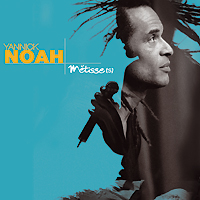
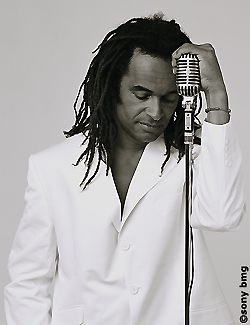
Yannick Noah is one of the mainstays of the French popular music scene. Following on from the success of Pokhara, his album recorded under Nepalese influence which sold more than a million copies, he is back with his fifth album Métisse(s). It has already clocked up sales of 150,000, despite the fact that this is something of a stop-gap album. It features duets with other singers, covers of other artists and a number of live tracks (including four from his blockbuster Pokhara).
It is perhaps symbolic that
Métisse(s) was released between two events that very much reflect Yannick Noah's values: the Fête de la Musique music festival and the Live8 concerts organised by Bob Geldof in the fight against poverty. Noah performed at the French Live8 concert in Versailles. He is the founder of the charity Enfants du Monde and supporter of a number of others, and considers himself very much committed in the struggle against poverty. But he considers discretion the better part of valour and it is not something he tends to sing about in his music. Essentially, he prefers action over the relative power of song. The French Fête de la Musique held on June 21 is another project that is dear to his heart. When it was originally launched in the 80s, the then minister of culture Jack Lang invited him to promote the event, seeing in him a man capable of uniting people. It was 1983 and Noah had recently won the French Open, finding himself in the elite club of French players who had won in France. With a French mother and Cameroon father, he also reflected the new melting-pot France.
And
Métisse (mixed race) is indeed the title of the track he sings as a duet with Disiz la Peste. It was the French Senegalese rapper (who found fame with the film
Dans tes rêves) who initially approached Noah. To begin with, Noah was simply going to add his voice to Disiz's vocals. In the end, their roles were reversed, balancing Noah's smoother delivery with Disiz's heavier, more biting approach. The song is a blend of hip hop and world music influences, with lyrics that don't push the envelope too much, but work well nonetheless: "No need to travel to say that I come from afar," words that reflect the Noah style. He defines that style on his previous albums as a mix of music and positive messages about tolerance and unity, plus a fierce attachment to his roots.
Noah is a huge fan of black stars like James Brown and Bob Marley, and on this album he duets with reggae great Jimmy Cliff on the track Take your time. He was originally invited by the Jamaican legend to sing on his latest album, where this track originated. Mixing genres, the last icon of reggae performed his subtle version of Black Magic, and among prestige duets with Sting, Annie Lennox and Joe Strummer on his album, Noah also made his appearance. Because once Jimmy Cliff asked him to sing on his album, it was difficult to refuse! Both men in their different ways are about opening minds as well as opening up music to other influences, and all done with impeccable good humour.
Like a lot of young French people in the late seventies and early eighties, Noah was very much taken with the French rock group Téléphone. His cover version of
La bombe humaine comes as no surprise then – and not even a happy one! Noah takes things a little too far here, with rather anodyne results. Its bland pacifism is also found on his outmoded interpretation of the Marseillaise
Oh rêves. A lot of water has passed under the bridge since Noah invited Aubert and Bertignac to play charity concerts for his association Les Enfants de la Terre. Later, while writing
Pokhara, he once again caught up with Bertignac in Nepal. They took the opportunity to play some classic rock together at concerts organised by the French Cultural Centre there. It was one way of getting back to a couple of his first loves: the Beatles and the Rolling Stones.
But Noah is more on form on tracks like J’aurais dû comprendre which he sings with Myriam Vialatte, or La voix des sages and C’est pour toi, performing with Zam-Zam. It's a shame that on this second live recording the production is a little too smooth and Noah's intensity doesn't really shine through. But thanks to his charisma, Noah nonetheless manages to connect with his audience on tracks like La voix, although his "shaman" stage act exemplified by tracks like Ose is perhaps not his strongest side.
Yannick Noah found tennis too much of an individual endeavour, and music allowed him to be part of a group, a team and a tribe – just as McEnroe once tried his hand at being a hard rocker, Jim Courier turned to drums and Wilander sometimes strummed the guitar. On this album, Yannick Noah's voice once again finds its place at the heart of French popular music.