
 |
  |

Yannick Noah at the Olympia
Game, Set and Match!
11/12/2000 -
Following the success of his latest album, released in the autumn of this year, Yannick Noah made his debut at the legendary Paris Olympia on Tuesday, December 5th. The former tennis champion, who triumphed at Roland Garros in 1983, brought the house down at the Olympia, flying the flag for Rastafarianism from the start of his show. RFI/Musique caught up with the 'singing tennis-man' after the show (see interview below) and he told us the secret of his success both on and off the courts.
After Noah had taken his final bow, the audience began ad libbing along with his songs, reluctant to let him go for good. Minutes later, Noah came bounding up on stage to strike up an acoustic encore of Bob Marley's reggae classicRedemption Song. But the final cherry on the cake was Noah's vibrant reggae version of the Marseillaise. When the singer released his pacifist version of the French national anthem three years ago, he caused an absolute furore, listeners to several leading national radio stations calling in to demand it be taken off the airwaves - and it promptly was. Overcoming this pseudo-boycott, Noah revived his Marseillaise live on stage, sending out a message of love and tolerance in his new lyrics: Aux reves, citoyens, ... vivons la liberte et la fraternite! (Take up your dreams, citizens ... long live freedom and fraternity!)
Interview with Yannick Noah: RFI: Listening to your latest album, it's obvious that you've really been bitten by the reggae bug? How did you get into reggae in the first place?
Yannick Noah: It happened gradually really, in several different stages. The first time reggae had a really profound effect on me was when I heard Marley for the first time. Then, after that, there was my first trip to Jamaica. I'd already travelled round the Caribbean and been to Africa by that stage. But there was something special about Jamaica - I met people who had a really strong sense of their identity and their culture. There was something really refreshing and, at the same time, really deep and powerful about them. In Jamaica you're surrounded by this incredible energy all the time and you feel really buoyed up by it. The first thing I did when I started playing tennis was strap this bracelet with the Rasta colours on my wrist. I felt I really needed it. It was a sort of secret sign to my friends back in Jamaica, but at the same time it gave me strength too. When I got back to Paris after my first trip to Jamaica I got straight on a train to Saint-Maur (a suburb with a huge African population). I had a short hair at the time and I wanted to get straight out there and get myself some fake dreadlocks. It was an essential rite of passage for me! So you'd say reggae has given you a kind of inner strength?
Yes, I've had some pretty amazing experiences through reggae. I remember one particular occasion. There's this place just outside Negril (in Jamaica) where there's a cave with a fresh water spring gushing down inside. Local Rastas often go there because they believe it purifies their souls. You go into the cave, blow out the torches and find yourself in total blackness, wading under a downpour of water. It's like being under a waterfall. Someone's put a sort of chair underneath and you can sit there on your own or there's room for one other person. And you can just sit there and soak everything up for a while. It's a very powerful spiritual experience.
I remember I wasn't feeling too hot when I went out to Jamaica that time - I had aches and pains everywhere. But when I came out of the cave I instantly felt better - something had happened in my head too. It's like people who go off to Tibet for a moth and come back feeling spiritually recharged. That experience in the cave really recharged my batteries! After that, every time I got a sudden rush of energy and adrenalin, I don't know why but I'd shout out Jah Rastafari! Your new album's not entirely reggae though, is it?
No, reggae's just one musical influence among many others. The thing is, I'm not a Rasta. I love Rastafarianism and Rastas themselves - they're people who've got this really incredible inner strength. It's not a philosophy about closing doors and cutting yourself off from the world - on the contrary Rastafarianism is about opening yourself up to the world. I'm not a real Rasta though, I was born in Sedan (in the Ardennes), but I've got Cameroonian roots, I love Jamaica and I live in New York!
 There's a song on your new album called La Voix Des Sages (The Voice of Sages) which seems to put across the message that we should respect our ancestors the way people do in Africa ...
 The image I use in the song is this old African wise man sitting under a tree, but I think a guy living out in the countryside in France would get exactly the same kind of emotion thinking about his grandfather. My 'sage' is bound up with the image of the old African wise man but also of my own poet grandfather from Charleville-Mézieres who felt completely at home when he went out to Cameroon. For me, wisdom is about being able to appreciate everyone around you. Lots of people have put that message across in their own way, but the aim is the same - true wisdom comes from knowing your fellow man. On another track on your new album, Simon Papa Tara, you recount a very special kind of meeting with your dead grandfather ...
Well, I guess if I'd spent my whole life in France, it would really have freaked me out. But I grew up in Cameroon where there was a totally different approach to the spirit world. People went round saying things like, Our uncle died four or five years ago but the other day he came to me and told me to go out into the field and bring this back to plant in front of your house. It's a totally natural thing in Cameroon, so when it happened to me I didn't freak out at all. But I must say when I talk about it over here, I've noticed people giving me a bit of a funny look! I like the idea of talking about it in a song though. Some people will see the song as a simple tribute, but others will look at it a bit more closely and understand there's something else going on here. Has your current success taken you by surprise?
Well, I recorded three albums before this one. I guess I've taken time to find the right way of expressing my emotions. I'm not an aggressive kind of person, I don't like imposing myself in any way. I had to find something which really corresponded to me, something I felt I was singing completely naturally. I feel really pleased with the lyrics on my new album - even though some of them also have the power to upset me. When you recorded this new album were you aware that there was something special about it that set it apart from the rest?
Yes. This time round I knew it was really me. I sang most of the stuff I recorded before in English - I was doing it to please myself really. But you reach a point where you have to take other people's feelings into account as well. It's not really that you're making music for other people - I mean, you can never say you're recording exactly what they want to hear. But at the same time you have to be aware that you're playing for your listeners. When I used to go on stage in Pontivy and do an entire concert in English, it reached a point where people didn't understand what I was going on about - and that's fair enough! At the end of the day, you do have to take your listeners into account.
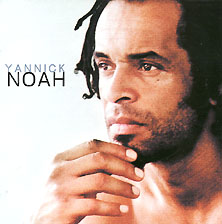
Yannick Noah (Sony/San Paolo)
Bertrand Lavaine



27/08/2010 -
25/07/2005 -
05/09/2003 -
06/10/2000 -