
 |
  |

Album review
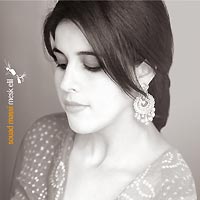
Souad Massi
Mesk Elil
Paris
25/11/2005 -
 |
 |
Souad's new album Mesk Elil ("honeysuckle" in Arabic) is still bathed in the sweet scent of nostalgia. But there is a major difference between Mesk Elil and her two previous albums. This time round, the singer has concentrated her attention on the music as well as her lyrics, creating the real sound of a band and in so doing banishing clichés of the frail folk singer perched in front of her microphone, guitar in hand.
A rawer, roots sound
 |
|
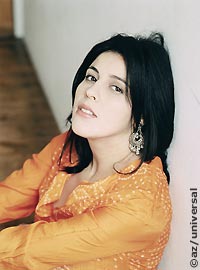
Souad has totally changed her attitude in the studio, too, learning from her collaboration with a new producer. "On Mesk Elil I worked with Jean Lamoot," she says, "a producer who's recorded and mixed albums for Alain Bashung, Noir Désir, Brigitte Fontaine and Salif Keïta. Actually, it was after hearing Salif Keïta's album Moffou that I decided I wanted to work with Jean. He's a very patient kind of person and working with him meant that, right from the word go, I was involved in creating the overall sound 'colour' of the album. I learnt a lot working with Jean. Now when I'm in the studio, I pay attention to where the mikes are positioned and listen to advice, taking on board suggestions for different directions we could take the music in."
Souad describes the sound on her new album, Mesk Elil, as being "much rawer, more roots" and adds that in the studio "we very rarely altered the takes with the vocals, preferring to keep the first takes if they had the right amount of emotion and the right intention. On some songs you can actually hear my breathing or the sound of the plectrum sliding up the neck of the guitar. If they sounded like there was a reason for them to be there, we kept incidental noises like that in. Jean helped me a lot in deciding what to keep and what to throw away."
A headful of imagesWhile, musically speaking, Mesk Elil is very different from Raoui and Deb, it contains certain thematic links. "I've still got this tendency to talk about things I miss. I'm still writing songs about exile and nostalgia," says Souad, visibly moved even when she evokes the subject. "But I don't think it's a nostalgia for one particular period in my life, like childhood, for instance. It's more a case of images that have taken root in my mind and continue to grow there over time. These days when I go abroad, for instance, it's Paris I miss!" Even Souad would admit she has a complex relationship to the past, memories flooding in from all sides, triggered by a simple image or odour. The heady scent of honeysuckle caught in the air during a concert she gave in Tunisia was enough to bring back entire scenes from her childhood years in Algeria.
Mesk Elil revolves around this central leitmotiv, honeysuckle having the same powerful effect on Souad as Proust's madeleine. On Dar Dgedi, she evokes childhood memories of her grandfather's house in Algiers. Malou is a song where an old woman mulls over memories and regrets and Hagda Wala Akter, supported by the haunting sound of a cello, recounts a meeting with a longlost friend with whom Souad used to play classical music. Denya Wezmen, a ballad set against a backdrop of traditional Arabic-Andalusian music, explores a different realm with two erstwhile lovers struggling to talk to one another again. Manensa Asli, a duet with Daby Touré about the importance of roots and being anchored in a particular culture, ups the musical tempo somewhat while Ilham is a poignant tribute to the singer's elder brother, who stayed behind in their home village to look after the family. This song, which appears in a remixed version at the end of the album with a new title, Mahli, is more than simple wordplay on Souad's name. It could well prove to be a foretaste of what's in store on future Souad Massi albums.
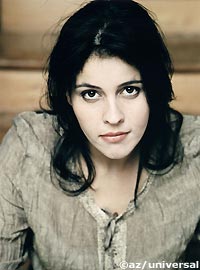
"I feel like doing all kinds of things and shooting off in all kinds of different directions," says Souad, brimming with enthusiasm, "I'd love to try a really roots sound and experiment with electro." The singer, who worked with drummer Moktar Samba, percussionist Mino Cinelu and the guitarist Djely Moussa Kouyaté on Mesk Elil, is now looking to broaden her musical horizons even further. "Recently, I've got into Cuban and African sounds and discovered classical music," she says, "sounds that I either didn't know or hardly knew at all before." Given this insatiable appetite for new musical experiences, who knows where Souad's next album will take her?
Souad Massi. Mesk Elil. (AZ/Universal)
Tour begins January 2006
Squaaly
Translation : Julie Street



28/03/2003 -
04/05/2001 -