
 |
  |

Passi’s rap Evolution
From the indie circuit to a major label
Paris
18/10/2007 -
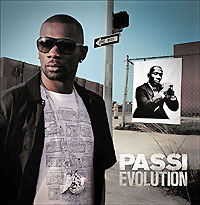
Passi has been absent on the solo front for several years, although he has been kept busy with various collective projects including the popular Dis L’heure 2 compilations in the meantime. Then, at the beginning of this summer, the veteran French rapper re-emerged on the scene with Révolution, a street CD that preceded the traditional album release of Evolution. "For those who are interested," he says, "my record label will be bringing Evolution and Révolution out together as a boxed set some time soon. As far as Révolution was concerned, I’d never done a street CD before and it was something I had to get out of my system. I had to satisfy my urge to do street rap before I could move on and do something more mature. Révolution came out in the run-up to the French presidential elections. It’s a much more hardhitting affair. Révolution is my angry protest side, whereas Évolution is much more musical and artistic. It involves string sections and real instruments. That’s one of the new directions I think rap should start moving in now."
Switching labels
After Les Tentations, Genèse and Odyssée, His Royal Highness with a Double S has finally broken with his independent label past and signed to a major record company. "The end of my relationship with V2 was a pretty tough time for me," admits Passi, "My single with Calogero, Face à la mer, got to number 1, but at the same time my record label wasn’t out there promoting my album properly. I felt like I really needed to work as part of a team. I like it when I work as part of a collective and people push me on to higher things. Basically things had got to the point where I felt like I’d worked hard enough to work with the biggest and the best.
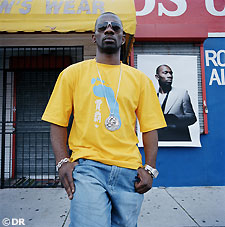
Being on an independent label is all very well when things are working out, but I’ve got enough on my plate right now. I wanted to play the artist, be true to my own artistic vision and all that, but I didn’t want to have to go round sticking up my own flyers! I’ve done that in my time - and I still do - but now I know what it feels like to be with a real major. Having said that, I’ve got plenty of other projects on the go on the independent front with Secteur A, Bisso Na Bisso and Peeda. I think the only way to confront the new market that’s emerged in recent years is to have a lot of strategies and support. A lot of rappers from my generation have signed to majors now - IAM are with Polydor and Kool Shen’s at AZ. We’ve all got the same mindset. We’re all rappers who’ve served our time on the independent circuit. We’ve all stuck our necks out and taken our share of risks!"
Right now the challenge facing established artists such as Passi, who helped forge the history of French rap and give the movement meaning and credibility, is to invent a more mature version of rap which the specialist media still confine to a very narrow pigeon-hole.
"I think the time has come to get out there and try and do something authentic," Passi insists, "When your message is true, everyone picks up on it. That raw, hardcore style of rap - that I’ve done myself and I’m a big fan of - is not necessarily the best way forward. Hip-hop has other values, too. I don’t spend too much time going on about cops on my new album, for instance, because I’ve already done that in the past. What I’ve tried to do is give people something intelligent. Going "click click bang bang" and getting all the crazies excited works for some rappers, but there has to be an alternative as well. I’ve always dared to do something a bit different. I believe it’s a question of finding the right lyrics, then you can reach out and touch everyone. That’s the thing that will breathe a bit of new life into the rap scene today. There are some very passionate rap fans out there, who’ve helped build this culture, but they don’t want to listen to what the young generation are doing today because they can’t relate to it. They represent a sector with money to spend and who know what they’re talking about, but they’re turning away from rap because they don’t identify with it any more."
A little respect
The major problem, in Passi’s eyes, is that while hip-hop has emerged onto the mainstream and become an influential culture, rappers have yet to achieve the respect and recognition they deserve. "When you look at the different cultures that emerged towards the end of the last century," he says, "you’ll find hip-hop has advanced the most. Hip-hop has influenced everything from fashion to sport, but everyone still looks down on rappers.
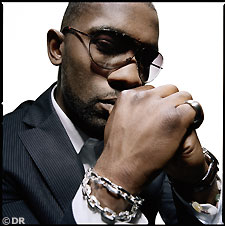
They totally underestimate us - and why? Because we’re still banging on about guns and stuff. It’s the same problem with the negative image of the suburbs that’s still being portrayed in the media. They’re always doing stories about gang violence, but they never focus on the kids with a university education who can’t get a job because they come from the suburbs. OK, we’re partly responsible for all that, but we still have a long way to go when it comes to getting respect for this culture we’ve fought for for all these years. We’ve done OK in terms of record sales, but we’re still out there on the fringe. Why is is still so difficult to get respect when you’re a rapper?"
The solution, claims Passi the rapper and producer, lies in evolution, pushing back musical borders and widening your horizons, by opening your album to a full range of international guest stars, for instance. "I brought out an album with Secteur A and I’ve done a number of tracks with Stomy and Bisso," Passi says, "I’ve done plenty of stuff with my mates. But this time round I wanted to move in a different direction. I’ve continued my collaboration with Wyclef Jean (there’s a track on the street CD with him and another on the album). Me and Wyclef get on really well. Then I met the German artist Joy Denalane. I felt like there was an instant feeling between us. Then there’s Michael Rose from Black Uhuru representing the reggae side which is very present on my new album. We did a song together about accepting others, a song that deals with the issues of colour, religion and social and ethnic divides… I’ve tried to add a real lyrical depth to my songs this time round. I talk about the world we live in, the way society got the way it is. I really hope this album will encourage other rappers to start talking about the wider issues, not just keep banging on about guns. We’ve spent too much time talking about the tip of the iceberg. Rap has to start addressing the bigger issues now. We can’t just keep going on about ‘le kärcher’* for years to come!"
*a reference to a controversial remark Nicolas Sarkozy, then Minister of the Interior, made about “blasting away the riff-raff” in the Paris suburbs
Jean-Eric Perrin
Translation : Julie Street



09/04/2004 -