
 |
  |

Elsa leaves mainstream pop behind
New album with an indie feel
Paris
23/09/2008 -
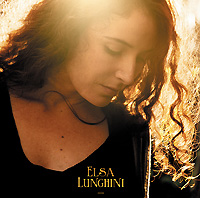
RFI Musique: There was a four-year gap between your last album, De lave et de sève, and the release of Oser. What have you been up to in the meantime?
Elsa Lunghini: Well, to start with I recorded a live album at L'Européen [in Paris]. After that I more or less locked myself away and concentrated on writing new material. I wrote a series of new songs, but at the end of the day I wasn't really satisfied with what I'd done so I ended up stashing them away at the back of a drawer. I decided to look for someone to work with instead and one day as I was surfing the internet I came across Da Silva. That was a real stroke of luck because he wasn't very well known back then. One of the things I liked most about Da Silva was that he came from a pretty different musical background to me. Anyway, I ended up asking him to write two songs for me. We hooked up after that and hit it off and Da Silva decided there and then that he wanted to write and produce the entire album - which was great because originally all I'd hoped for was a couple of songs!
And why did you feel Da Silva was the right producer for Oser?
I felt right about Da Silva because he doesn't come from the 'inner circles' of the French music world. He's evolved on the indie circuit instead. Also, I felt that somewhere down the line we share the same artistic sensibility. There's something forceful and violent about the content of Da Silva's work, but it's always wrapped up in these soft, gentle melodies. And that's his signature stamp really, that mix of energy and gentleness. I love artists like him who manage to remain accessible to the wider public while striking out in different directions away from mainstream pop and 'variété.'
You've also tried to strike out in different musical directions whereas you could easily have stayed in mainstream pop…
I have and I think that's one of the reasons I identified with Da Silva and why I feel like I understand where he's coming from. For more than a decade now I've tried hard to stick to my principles and only do stuff I really like. Of course, I'm aware that in doing so I may have confused some of my fans along the way. Oser is not an easy album. It can sound a bit barren at times and the lyrics can be a bit harsh, like on La Dernière des Canailles, for instance. Some people may object to me having made an album like this, but if I'm honest deep down I don't give a damn about what other people think!
Vocally, you seem to have matured a lot on this album…
I think it's a matter of tonality. Manu [Da Silva] decided my voice was too high and he got me to take things down a bit and sing in a register much closer to my spoken voice. I think my new vocal style suits the lyrics and the overall spirit of the new album and it fits better with who I am these days.
Oser is a very rhythmic, very acoustic album and many of the tracks on it sound as if they have been written with live performances in mind…
Da Silva is an artist who spends twelve months a year out on the road. And I think it's fair to say there's a bit of live energy on Oser. That's also one of the reasons why, musically speaking, the new album is pretty bare and stripped back. We wanted to leave ourselves some freedom to adapt the songs live on stage, adding a bit of extra rhythm, a bit of extra energy and experimenting with a different musical feel at times.
How did you go about working with Dominique A, who wrote two tracks on Oser?
Well, I've never actually met Dominique A. But Da Silva hangs out within the same circle of friends and he called him up and asked him if he'd be interested in writing a couple of songs for my album. Dominique agreed and got down to work really quickly without us having to meet up at all. I didn't have to change a thing. The songs he wrote for me fitted me like a glove! Dominique is a real poet and an exceptionally talented musician. I'd say he's one of the most important figures on the current French music scene, in fact. And he's just like Da Silva in that he refuses to give other singers old songs he's got tucked away at the back of a drawer. He writes completely new material. And believe me, that's not the way everyone in this business works…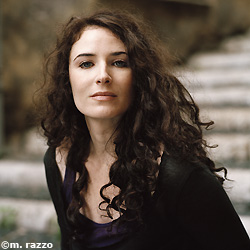
I certainly hope so! I have to say I'm not bitter and twisted about the whole affair. I simply consider that I was involved in a legitimate fight - and I took it all the way and won! But there's no denying that the whole process was extremely long, drawn-out and very stressful. And, for reasons that had nothing to do with my artistic capability, my career was put on hold for eight years. At the end of the day you realise that artists are just small fry compared to record company bosses! But I managed to bounce back from all that and that's what counts.
What kind of music are you into at the moment?
Quite a lot of new stuff actually. In terms of the 'new French chanson' scene I've got a bit of a thing about Joseph d’Anvers and Pauline Croze. I've also been listening to a lot of new rock bands like Arcade Fire, The Do and The Kills… But I still make time for my 'classics' like Brad Mehldau and one of my all-time favourite artists, JJ Cale. When it comes to music, I listen to a lot of different things. I'm totally bulimic, in fact!

In concert at Le Café de la Danse (Paris): 27, 28, 29, 30 & 31 January 2009
Jérôme Pichon
Translation : Julie Street



07/05/2004 -