
 |
  |

Abd Al Malik’s melting pot
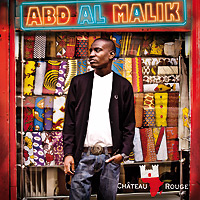
Fourth album, Château rouge
Paris
13/12/2010 -
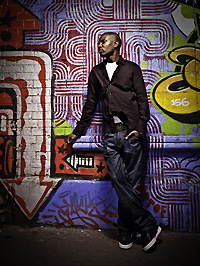
The fourth album from Abd Al Malik is a bit of a surprise. Produced by the Canadian, Gonzales, Château Rouge opens up to African and electronic music, rap and song, and even English lyrics. RFI met up with a man who enjoys clashing cultures.
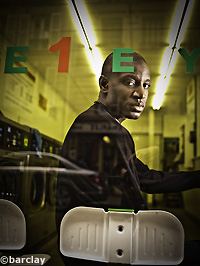
Abd Al Malik: The album is based on the sad event of my maternal grandfather’s death. My work is to explore and question my identity. If I take the image of a tree, up until now I’ve been talking of my fruit. I found I wanted to talk about my roots. This record is a kind of manifesto on identity, which is always a mosaic. It’s a kind of response to all the aberrations that we’ve had to listen to, like the debate on national identity and the way unofficial immigrants and Romas have been cut off.
On this new opus, jazz and song have been replaced by African and electro music. The slam opens up to rap and singing….
An artist always has many sides. It’s like visiting different rooms in the same house. That’s why I really admire Jacques Brel, who stopped because he felt he was starting to imitate himself. I also admire people like Bashung because every album is different. They’re my focal point. I’m not a real slammer, I’ve always said that, I use slam like I use jazz or song, or like I’m using Congolese rumba rock at the moment.
Three of the compositions are in English. Are you thinking of an international career?
It would be hard to bring up Africa without admitting that English is increasingly taking over from French there. A lot of young Africans from the former French colonies dream about going to New York more than Paris. On Ground Zero, it felt more natural to sing in English. It was funny to sing with my French Antoine de Caunes-style accent. The Lari and Lingala languages are in there too. We’re going to do a proper international tour, taking in the United States, Great Britain, Brazil and Africa.
Of course it is. It’s easy to slip into cynicism or irony with a kind of elegant sarcasm and think you know everything about everything. I only talk about what I know. In this globalised frenetic place we live in, what can we do so that people from so-called different cultures can move on together? From my point of view, that’s where the real subversion lies: in saying that we should try this “living together” thing.
You have just been awarded the Edgar-Faure 2010 political book prize for La guerre des banlieues n'aura pas lieu (the suburbs war won’t happen). Are you pleased?
Prizes are a bit like chocolate money. But given where I started out, it is important, yes. It shows that if I can do it, anyone can. One of my roles is to give hope.
You practise Sufism. What does religion mean to you?
Religion and spirituality are central for me. The reason that I’ve talked about Islam, for example, is because since 9/11 there’s been this kind of incredible misunderstanding. Islam gets portrayed as being intrinsically violent. So there’s a need to re-establish the truth: Islam is like all spirituality, it talks of love and accepting others despite their differences.
Have your philosophy studies influenced you in trying to find the mot juste?
Yes. But the music dictates the words first. I write fast, the lyrics have to be wrapped up in thirty minutes. On the other hand, I really take care about the meaning and implication of the words. What surprises me is other people’s rapport with words. For example, many people can’t see the difference between a moral text and a moralizing text, but they’re nothing like each other. Moral writing is like La Fontaine’s fables, where the story has a moral, and that’s what I write. Sometimes I get accused of having a moralizing attitude.
“Philosophising does more bad than good”, why?
It’s easier not to calculate anything and go through life without asking yourself any questions. For someone like Deleuze, it’s hard, because reality hurts. In my neighbourhood in Strasbourg, the big scourge was heroin. The people who got into it were the most sensitive people around me. If you don’t philosophise, then you get off your head on something.
Abd Al Malik Château Rouge (Barclay/Universal) 2010.
Abd Al Malik La guerre des banlieues n'aura pas lieu (Ed. du Cherche Midi) 2010
On tour from 15 March 2011
Nicolas Dambre
Translation : Anne-Marie Harper



30/01/2009 -
13/11/2008 -
15/02/2008 -
06/02/2008 -