
 |
  |

Album review
Pierre Akendengué
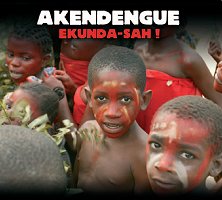
Ekunda-Sah!
Paris
25/03/2005 -
 | |
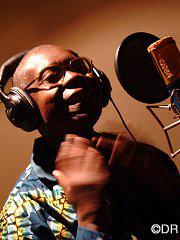
Pierre Akendengué had barely touched down on French soil before the questions and accusations began. The singer, who had made a special trip to France to promote his new album Ekunda-Sah!, found himself brought face to face with his past. Before even arriving at his record label HQ, Akendengue was forced to measure the consequences of the personal and professional decisions he had made two decades ago - and realise that the years had not completely wiped out his fans' feelings of bewilderment and incomprehension!
Akendengué's relationship with France began in the mid-60s when he left his native Gabon to follow a course of treatment for an eye disease in a Paris hospital. He ended up staying on in the French capital and honing his vocal skills at the famous "Petit Conservatoire" music institute run by the legendary Mireille. Over the next few years, Akendengue established himself as one of the first artists from French-speaking Africa to make a name for himself in France. Encouraged and supported by Pierre Barouh (the man responsible for launching the careers of many leading French artists such as Jacques Higelin and Brigitte Fontaine), Akendengué released his debut album, Nandipo, in 1974. Two years later, he carried off the "Prix de la jeune chanson française" at Midem with his next album Africa Obota.
Akendengué went on to become enormously popular, building a significant fanbase amongst the French-speaking African community in France. His fans loved him not just for his music, but because he acted as an unofficial spokesperson for their community and defended social and racial ideals. Akendengue believed that "an artist should be a vehicle for protest in society, because if he fails to act society runs the risk of becoming hidebound and ossified." "During my time in France," Akendengue insists, "I did my own little bit towards promoting a different image of Africa. I tried to show people that another kind of Africa existed, an Africa that went beyond waste and corruption, economic pillage, natural catastrophes and fratricidal wars. And I tried to do this through art – because art is basically about trying to create something of beauty; it's an attempt to transcribe an abstract idea of beauty, justice and equality in the hope that this will filter through into action! I tried to put across a privileged image of the happiness and sufferings of human beings in general, and Africans in particular. And I think, at the end of the day, I made a certain contribution towards the rehabilitation of Africa's image, showing the continent in a more positive light."
The End of Exile
 |  |
Many people must have wondered exactly what Akendengué intended to do when he got back to Gabon, given that his songs were still censored there. But, in a dramatic reversal of fortune, the singer ended up appointed as a government adviser shortly after his prodigal return. This left many Akendengue fans with a bitter taste in their mouths, fretting that their erstwhile spokesperson had finally sold out. Akendengue denies the charge, however, claiming that "becoming a government adviser allowed me to get right to the heart of what was most important to me, allowing me to steep myself in the roots of the culture that has inspired the handful of songs I've made in my career."
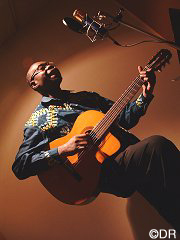
Akendengue’s answer to those who continued to believe that he would have been more use to his country if he had stayed in France? His 1993 album Lambarena on which he brought together the classical compositions of Bach and the traditional music of Gabon. This, Akendengué insists, was an album he could never have made without having returned to his homeland first. Living back amongst his compatriots – "and not in any way on a level above them!" – Akendengué felt that his responsibility as an artist towards society had actually increased as a result of going back home. His return to Gabon was not without a certain amount of personal sacrifice, either. Given the country's lack of recording facilities and the financial investment necessary to make an album, Akendengue's career suffered a major slowdown. His last two albums each took over four years, not due to any lack of artistic inspiration, but to a simple question of funding! After all, Pierre Akendengué is not a man to embark upon a musical project without being sure of directing it exactly as he wishes.
 | |
Meanwhile, Akendengué continues his work as cultural adviser to a government that has been heavily criticised from several quarters. The singer insists that he remains true to the principles he has upheld all his life, however. "Art should always primarily be an instrument of liberation," he declares, "An artist should never speak simply for the sake of speaking and he should never lie about things he knows. I think the handful of songs I've made in my career – which have been appreciated by certain music fans over the years – have never waived from that principle. Because, in the silence of his own heart, the artist always vows he’ll be faithful to himself!"
Pierre Akendengué Ekunda-Sah! (Taxi Records/Codaex) 2005
In concert at Le Bataclan in Paris on 4 April 2005
Bertrand Lavaine



19/11/2008 -
21/04/2006 -
31/01/2006 -
29/03/2002 -