
 |
  |

Pierre Akendengué defends African history
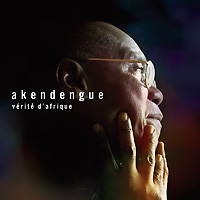
Vérité d'Afrique
Paris
19/11/2008 -
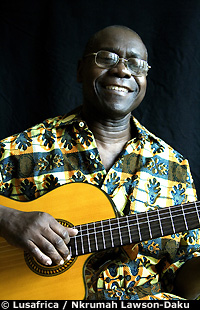
RFI musique: The title of your nineteenth album is Vérité d’Afrique (The truth about Africa). Why truth in the singular?
Pierre Akendengué: It's a direct response to the speech that (French president) Nicolas Sarkozy made at Dakar University where he claimed that Africa is a continent that stands "outside" history. There's one single global truth about Africa and that is that the continent has a pre-colonial history based on organised empires which brought people of different origins together. That history also includes slavery, successive colonisations that involved exploitation and resettling and then came the disillusions of independence where we had one-party states led by supposedly "enlightened and infallible" guides. Then there have been all the issues linked to development, the systematic pillaging of African resources and the problems associated with democracy, corruption and genocide.
What do you think about the recent decision to introduce the teaching of African history in French schools in 2009?
I think anything that contributes towards a better knowledge and understanding of African history is a good move. African history is a point of contention and if we want to clear up argument and move on, we have to start talking about African civilisations and establish some sort of dialogue between peoples, for our children's sake if nothing else. Like many others around the world, the African people have to live with the heritage of having been a people who were downtrodden and humiliated. I think that if we want to move forward and cure this kind of complex, we have to assume that history and move beyond it. Barack Obama's election as U.S. president represents hope in that respect, hope and a promise of brotherhood and fraternity.
You sparked controversy on one of your earlier albums suggesting that certain African sovereigns had played a role in the slave trade. How did that go down in Africa?
Needless to say, my remarks got a very negative reaction. I was essentially misunderstood, but I find it normal that people should contest what I say.
Well, I remember when I was a young student in Paris, she came along and visited me one day in this little room I had at 25 rue de la Roquette (near Bastille). She asked me if I'd write a couple of songs for her. Sadly, our collaboration never came to fruition because back in those days she was based in Guinea and communications between France and Guinea were very poor. The vital thing that Miriam taught me was that a work of art has to be an instrument of freedom. On November 7th, the day she died, I was actually in Ivory Coast picking up the award for Best African Composer from the Association of Ivory Coast Artists. It just so happened that the Best Female Vocalist award went to Miriam Makeba. Aïcha Koné collected it on her behalf, but Miriam died before she could pass it on to her.
You chose to record your new album in the Marcel Djabio studio in the middle of a shanty town in Libreville. Why was that?
I've chosen to live in Gabon amongst my people. I'm deeply embedded in the day-to-day reality of my homeland and I draw on that in my work. I select the songs I'm going to record based on three main themes and those themes are African unity, the service of truth and the quest for freedom. I have problems with my eyesight so that means I can't sit down in an office and write scores. I have to exteriorise things as I go along and have people sing things directly so I can hear how they sound. The way I work is first I get my backing singers together and work out who's going to sing each part, then I sit back and listen to the overall effect. In that respect it's very much a collective work.
The majority of your backing singers don't speak Myéné. So how do you go about working together?
I start out by trying to teach them certain Myéné sounds and then the girls interpret them their own way with their own individual timbres. Take Pascale Mengome, for instance, she has a really superb voice and she added her own special edge to my reggae song Tanguna Gakumuna. This kind of music is generally pretty recitative and militant, but Pascale brought her own musicality and sensitivity to it.
Your backing singers seem to be impressed by the fact that such an eminently well-known singer and songwriter as yourself should actually listen to their opinions. Are you trying to break away from the traditional African system whereby the village elder transmits his knowledge to the next generation?
Let's just say I like to arrive with an agenda and submit it to the others, knowing that there's room for amendment. When I write songs I always need some kind of feedback. It's as if you're standing there emitting a sound and you get an echo, a direct reaction from the person who hears it. My backing singers have their own way of interpreting and understanding things, there's always a dialogue between us. I try to be as simple and transparent as possible and not put any distance between myself and my musicians.
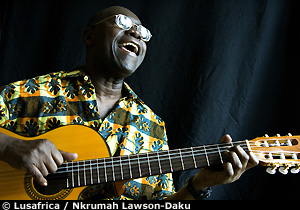
I'd say that the sounds of central Africa are basically warm, festive, light and upbeat. The Cape Verdean musicians bring a certain depth to things. They add a nostalgic dimension to my music.
As you bring out your nineteenth album, how do you see the state of play on the African music scene today? Are things more solid or more fragile than they were when you started out?
The music industry is in crisis right now, like all the other sectors of the economy. But I'd say that, over the years, African music has definitely progressed and carved out a place for itself on the world stage. African musicians have benefited from increasingly high standards of training and they've got rid of a lot of inferiority complexes along the way. African music has proved to be a competitive force on the world market. Indeed, I'd go so far as to say music is Africa's best-selling commodity these days.
Do you think the local music scene in Gabon has evolved over the years?
The local market is very small. Gabon has a population of just 1.5 million and culture does not play an important enough role in everyday life. I like to say that the forest is our university, the place we learn. The forest has so many riches we have not yet explored. A famous poet once wrote that "the caged bird is like human beings who love closed spaces." If we want local talent to shine, we need a real system of regional cultural integration.

Sylvie Clerfeuille
Translation : Julie Street



10/04/2009 -
21/04/2006 -
31/01/2006 -
25/03/2005 -
29/03/2002 -