
 |
  |

Rokia Traore
Just a Normal Girl
Paris
29/09/2003 -
Why did you decide to turn down a deal with a major label and go off and produce this album under your own steam?
The thing that really interests me as an artist is being able to see a project through from A to Z. This time round I decided I wanted to produce the album myself and then arrange a distribution deal through a major label. I'm like any other artist really when it comes to dreams of fame and celebrity. And I realised the same thing was happening to me as had happened to other artists on the 'world' scene when they started dreaming of getting their music across to a wider audience.
Negotiations with record label bosses ended up dragging on so long that it gave me time to think about what I really wanted. When it finally came round to signing a deal I realised I didn't actually want to any more because the people who were making all the decisions were the finance men, people who sit in their offices all day calculating how much such and such an artist is going to sell. I didn't want to get caught in that trap so I ended up signing a distribution deal with Label Bleu for Europe, but I reserved the right to work with other distributors for the rest of the world.
Niènafîng is a song about the values of Mali. Is that something you feel proud of, being Malian?
Very much so and that's why I'm involved in making music, in fact. I'm proud of being able to show a lesser-known side of Mali. I'm someone who grew up in a town, not a village, and I'm interested in putting across a different image of my country, my generation's view, if you like. I want to show Mali as a thinking country, a country on the move, that's changing like everywhere else in the world.
Actually, I get the impression it's easier to make a name for yourself as a Malian singer if you've got a more "roots" kind of sound or you come from a poor neighbourhood or something. I really feel I'm too normal sometimes, too much like a girl from the developed world. I didn't learn to sing growing up in a traditional griot family, I'm not even from Wassoulou. There are no hunters in my family and I'm not a princess. I'm just a normal girl - and that's the side of Mali I'm trying to show in my music.
Do you still do all your recording work in Bamako?
Yes, I do. My first two albums were recorded at the Bogolan Studio and all the instruments for this one were recorded there, too, apart from the strings of The Kronos Quartet which were done in San Francisco. I want people in my country to get something out of what I do. I'm not claiming to have created jobs or anything, but I do make a point of working with musicians in Mali. For me it was more than recording an album actually, I wanted to create genuine contacts and inject a bit more professionalism into things. Music in Mali is so natural, we have such a wealth of music and culture that we don't always realise this is a profession which requires a lot of hard work, too.
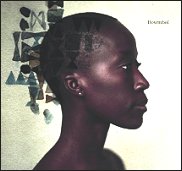
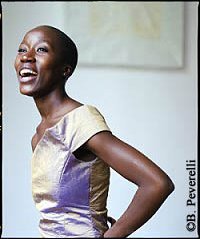
The album cover of Bownboï shows a striking new-look Rokia. How has your new appearance gone down in Bamako?
Very, very badly! But, between you and me, I'm pretty used to that by now. When I was growing up I always felt like a bit of an extra-terrestrial. When you spend your life travelling round (Rokia's father was a diplomat) you get to the point where you're not like anyone else any more. But I've never been bothered about what other people think, I do what I want in life, both at home in Mali and elsewhere. When I shaved my head I could imagine just how badly it was going to go down, but it's something I'd wanted to do for three years, you know. I was really fed up with those interminable braiding sessions I had to go through all the time, getting on the train to go to Paris every month and spending the whole day at the hairdresser's! But yes, my shaved head has made a bit of an impact. When I went back to Bamako in June people were all eager to give their opinion and tell me how I'd become totally Europeanised. My new look got people in Mali talking for weeks on end!
The title track on your new album, Bownboï, raises a theme that seems to be very close to your heart and that's childhood….
Yes, the title track's a lullaby my mother used to sing to me when I was a child. It's message is "God bless the poor man's child." One of the things that really surprised me in the West was that it's parents who decide to have a baby there. The way I see it, back home it's the child who decides to come into the world because there's nothing solid to ensure its arrival. Everything's so precarious all the time. If people acted the way they do in Europe and planned to have a child when they had enough money to look after it, they'd never have kids. Given that situation, it's easier to believe that the entire situation is out of your hands and put your faith in a higher force. People in Mali believe in everything, you know, black magic, marabouts, and the power of prayer – but they don't believe in themselves because they don't have the money to act that way!
Is M'Bifo, the opening track on the album, really intended as a "personal message"?
Yes and it's a very personal message, too. The recording sessions for the new album happened to take place at the same time as my husband's birthday. And I felt a bit sad I wasn't able to organise anything to mark the occasion, especially as he was turning 30. So I thought to myself "OK, I'll write a song for him." I think that kind of gift is much stronger than a party.
You and a group of other Malian artists have just lost an appeal case against a notorious record pirate back home. Is pirating still a big problem in Mali?
It really makes me sick, you know, not for the money, but because the people involved in pirating don't realise the harm they're doing. Most of them happily go to the mosque every day and say their prayers, but they have absolutely no respect for intellectual rights or copyright. They don't think about it, they see a cassette selling well so they copy it. It's as simple as that. It was really complicated getting all the artists together and convincing them to bring a court case against these guys who are importing crate loads and crate loads of cassettes. I was totally shocked by the judge's decision. The Malian government should be ashamed this story has got out to the rest of the world!
New album: Bownboï (Tama Productions/Label Bleu)
Tour dates: Albi (10/10), Sète (11/10), Blois (16/10), Paris (17 & 18/10), Pau (23/10), Marseilles (24/10) and London (6/11).
Pierre René-Worms
Translation : Julie Street



19/05/2008 -
03/04/2007 -
12/04/2000 -